





8 Protein Myths That Could Hurt Your Gains
Protein myths can derail your fitness progress. Here’s what you need to know upfront:
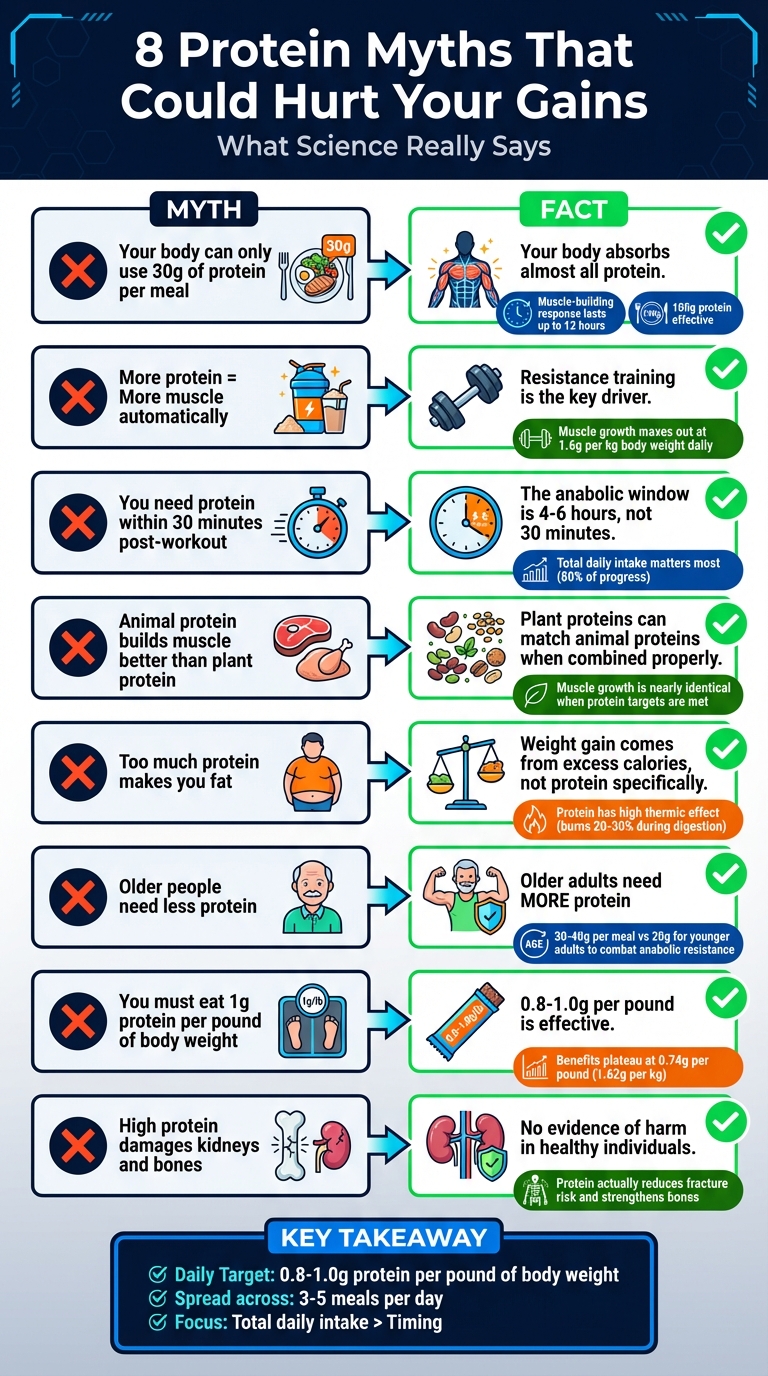
- Your body can handle more than 30g of protein per meal. Excess protein isn’t wasted; it supports muscle repair over time.
- More protein doesn’t equal more muscle. Resistance training is the key driver for muscle growth.
- The “anabolic window” isn’t 30 minutes. Muscle repair is effective for up to 4-6 hours post-workout.
- Plant proteins can match animal proteins. Combining plant sources can provide all essential amino acids.
- Protein alone doesn’t make you fat. Weight gain comes from excess calories, regardless of the source.
- Older adults need more protein. Age-related muscle loss requires higher protein intake.
- 1g of protein per pound of body weight isn’t mandatory. Needs vary based on training, goals, and body composition.
- High-protein diets don’t harm healthy kidneys or bones. Studies show no evidence of damage in healthy individuals.
Key takeaway: Focus on daily protein intake - 0.8 to 1g per pound of body weight - spread across 3-5 meals. Prioritize balance with carbs and fats for optimal results.
8 Protein Myths Debunked: Facts for Muscle Growth and Recovery
1. Your Body Can Only Use 30 Grams of Protein Per Meal
The idea that your body can only handle 30 grams of protein per meal comes from early studies that observed muscle protein synthesis (MPS) leveling off after 30 grams during a three-hour window. This led to the mistaken belief that anything extra goes to waste.
In reality, your body absorbs almost all the protein you eat. It puts that protein to work in various ways - like repairing muscles, producing enzymes and hormones, and supporting your immune system. Protein that isn't immediately used for MPS doesn't go to waste; instead, it continues to fuel muscle repair and recovery over time. For example, a 2023 study found that consuming 100 grams of milk protein triggered a muscle-building response that lasted 12 hours, compared to just 25 grams. Your body even slows digestion to ensure protein is absorbed gradually, keeping the muscle-building process active for longer.
Protein needs vary depending on factors like age and training. Younger adults may hit peak MPS with 20 to 25 grams per meal, while older adults might require 35 to 40 grams to combat age-related declines in muscle response. The type of protein also matters - whey digests quickly at about 8 to 10 grams per hour, while casein is absorbed more slowly at 3 to 6 grams per hour.
"The myth of the 30-gram ceiling has been debunked. Your muscles can use much more, as long as you give them quality nutrition and consistent training." - Ultimate Nutrition Editorial Team
Instead of stressing over how much protein you eat per meal, focus on your daily intake. Aim for around 0.7 to 0.9 grams of protein per pound of body weight. Spreading this amount across 3 to 5 meals throughout the day can help keep your body in a muscle-building state.
sbb-itb-7567710
2. Eating More Protein Automatically Builds More Muscle
Protein alone doesn’t magically build muscle - resistance training does the heavy lifting. While protein provides the building blocks for muscle repair and growth, your body won’t put them to use unless you’re actively engaging in resistance training. Without that physical trigger, extra protein is either burned for energy or, if you’re consuming more calories than you need, stored as fat.
Muscle protein synthesis (MPS) - the process responsible for creating new muscle - requires exercise to switch it on. Studies show that combining resistance training with adequate protein leads to muscle growth, but protein supplements by themselves don’t do much for muscle building in healthy people. Without exercise, your body simply uses the additional amino acids for energy instead of muscle repair.
"Your body has no reason to use amino acids for muscle construction without the exercise stimulus." - Charles Platkin, PhD, JD, MPH
This makes it clear: exercise is the driving force behind muscle growth, not protein intake alone.
It’s also important to note that there’s a limit to how much protein your body can use for muscle building. Research suggests that muscle growth typically maxes out at 1.6 grams of protein per kilogram of body weight per day (around 0.7 grams per pound). Consuming more than this - like 3 grams per kilogram - doesn’t result in additional gains. Similarly, MPS reaches saturation at about 25–35 grams of high-quality protein per meal. Eating 90 grams in one sitting won’t give you any extra muscle-building benefits compared to 30 grams. So, going overboard on protein is unnecessary and can even be counterproductive if it takes focus away from other important aspects of your diet.
Don’t forget about carbohydrates and fats - they’re key players too. Carbs provide the energy needed for intense workouts, helping to replenish glycogen stores and preventing your body from breaking down muscle for fuel. If you focus too much on protein, you might skimp on these essential macronutrients, leaving yourself without the energy to train effectively and trigger muscle growth. Balance is everything when it comes to building muscle.
3. You Need Protein Within 30 Minutes After Your Workout
The idea that you must consume protein within 30 minutes of finishing your workout is more myth than fact. Research reveals that your muscles stay primed for repair for a much longer window - around 4 to 6 hours after training. This misconception about timing can lead to unnecessary stress over your post-workout nutrition.
A meta-analysis reviewing over 20 studies found no major difference in muscle growth between consuming protein immediately after exercise and waiting a couple of hours. In reality, the total amount of protein you eat throughout the day is the key factor, accounting for around 80% of your muscle-building progress. Timing, on the other hand, plays a much smaller role. Muscle protein synthesis - the process of muscle repair and growth - remains elevated for 24 to 48 hours after resistance training, giving you plenty of time to refuel properly.
However, timing can become more relevant in certain situations. For instance, if you train on an empty stomach, having protein within 1 to 2 hours can help minimize muscle breakdown. On the other hand, if you've had a protein-rich meal 1 to 3 hours before your workout, your body already has amino acids available, reducing the need for an immediate post-workout shake.
Instead of stressing over the clock, focus on hitting your daily protein goal: around 0.7 to 1.0 grams per pound of body weight (or 1.6 to 2.2 grams per kilogram), spread across 3 to 5 meals. This approach ensures steady progress without the pressure of chasing a narrow "protein window." Next, we'll tackle another common myth that could be holding back your recovery.
4. Animal Protein Builds Muscle Better Than Plant Protein
The idea that animal protein is inherently better for muscle building than plant protein simplifies the science too much. While it’s true that animal proteins are naturally complete, plant proteins can match their muscle-building potential when combined thoughtfully.
Animal proteins generally have higher leucine levels, a key amino acid that activates muscle protein synthesis. For instance, chicken breast and beef provide 31 grams and 26 grams of protein per 100 grams, respectively. Additionally, animal proteins boast a digestibility rate of about 95%, compared to 60–70% for raw plant proteins.
The trick with plant proteins is combining complementary sources. For example, pairing beans with rice or hummus with whole-grain pita creates a complete amino acid profile comparable to animal proteins. Soy, in particular, stands out as a plant-based powerhouse. Tempeh, for example, delivers 19 grams of protein per 100 grams and contains all nine essential amino acids. A 2023 study even found that muscle growth was nearly identical between vegan and omnivorous participants when both groups hit their protein targets during resistance training.
Plant-based eaters may need slightly larger portions to reach the leucine threshold required for muscle growth. Fermented options like tempeh improve digestibility by reducing anti-nutrients. Ultimately, whether you choose plant or animal sources, the key is meeting your daily protein target - 1.6 to 2.2 grams per kilogram of body weight. What matters most is hitting your overall protein goals, not the source.
5. Eating Too Much Protein Makes You Fat
There's a common misconception that eating too much protein directly leads to fat gain. The truth is, weight gain happens when you consume more calories than your body needs - whether those calories come from protein, fat, or carbohydrates.
Protein has a high thermic effect, meaning your body burns more calories digesting it compared to other macronutrients. This makes it less likely to be stored as fat. However, overdoing it on protein - or any macronutrient - can still lead to fat gain. Registered dietitian Kate Patton from Cleveland Clinic explains:
"High protein intake also means ingesting excess calories. Your body turns excess protein into fat, so it's important to know how much you need in order to maintain your weight".
One of protein's standout benefits is its ability to curb appetite. It helps you feel full longer, which can naturally reduce your overall calorie intake. Plus, when paired with carbohydrates, protein slows the absorption of sugar, helping to maintain steady energy levels and reducing the likelihood of fat storage.
To strike the right balance, match your daily calorie intake to your activity level and aim to spread 20–40 grams of protein across your meals. This approach supports digestion, keeps you satisfied, and helps manage your weight. Up next, we'll address the myth about protein needs for older adults.
6. Older People Don't Need as Much Protein
Contrary to popular belief, older adults actually need more protein than younger people. As we age, our muscles become less efficient at utilizing protein, a process called anabolic resistance. While 20 grams of protein might be enough for a 20-year-old, someone in their 40s or 50s may require 30–40 grams per meal to effectively support muscle repair.
Not getting enough protein can speed up sarcopenia - the gradual, involuntary loss of muscle that comes with aging. A study from Purdue University highlights this: older men who consumed 1.6 g of protein per kilogram of body weight daily, paired with resistance training, gained 1.3 kg of muscle mass. In comparison, those sticking to the standard RDA of 0.8 g/kg/day only gained 0.7 kg. Dr. Wayne W. Campbell, PhD, explained that older individuals following just the RDA "paradoxically experienced decreases in whole-body fat-free mass", suggesting that the RDA might fall short for maintaining lean body mass in older adults.
For adults over 40, the recommendation is 0.8–1.0 grams of protein per pound of body weight each day . For example, a 180-pound person should aim for 145–180 grams of protein, distributed throughout the day. To counteract anabolic resistance, it's better to consume 30–40 grams per meal rather than spreading smaller amounts across the day.
Beyond muscle health, protein helps maintain bone density, speeds up recovery, and preserves metabolically active tissue, which supports a healthy metabolism.
7. You Must Eat 1 Gram of Protein Per Pound of Body Weight
The idea that you need 1 gram of protein per pound of body weight is a common belief in gyms and fitness communities. But the truth is, your protein requirements depend on factors like your training experience, age, goals, and body composition plans.
This guideline gained popularity in the mid-2000s, despite lacking strong scientific backing. A 2018 meta-analysis of 49 studies found that the benefits of protein for muscle growth tend to level off at around 0.74 grams per pound (1.62 g/kg). The confidence interval for this plateau ranged widely, from 1.03 g/kg to 2.20 g/kg, indicating variability in the data. Researcher Greg Nuckols highlighted this uncertainty:
"The range of plausible values for the (non-significant) breakpoint wasn't a tight, specific range of values within the dataset – it spanned almost the entire range of protein intakes studied”.
Training experience plays a big role in determining your protein needs. For example, a 2007 study found that lifters consuming 2.76 g/kg gained 5.62 kg of fat-free mass, compared to 2.7 kg for those consuming 2.24 g/kg. Another study showed gains of 2.3 kg at 2.92 g/kg, while those consuming 1.63 g/kg gained only 0.7 kg.
For most people, a range of 0.8 to 1.0 gram of protein per pound of body weight is effective. If you're dieting or training intensely, higher protein intake can help preserve muscle mass. Beginners might do fine on the lower end of the range, while experienced lifters - who rely on their training status for muscle growth - may benefit from higher amounts. If you're carrying extra body fat, it's better to calculate your protein needs based on your target body weight rather than your current weight.
As Dr. Layne Norton explains:
"If you're eating 1 gram per pound of your body weight, you're getting 95 plus percent of the protein's benefits”.
While 1 gram per pound is a good general guideline, individual needs vary. Factors like your goals, body composition, and training intensity are more important than hitting an exact number.
8. High Protein Diets Damage Your Kidneys and Bones
There's a long-standing myth that high protein diets can harm your kidneys and weaken your bones. This idea stems from outdated research on people with pre-existing kidney issues, where limiting protein intake is crucial. Unfortunately, those findings have been wrongly applied to healthy individuals [35–37].
In truth, healthy kidneys are well-equipped to process protein. When you eat more protein, your glomerular filtration rate (GFR) - a measure of kidney function - temporarily increases. This is a normal response, not a sign of harm [35,36]. In fact, a thorough review found no solid evidence linking high protein intake to kidney damage in healthy adults. Even resistance-trained athletes consuming up to 4.4 g of protein per kilogram of body weight daily (around 2 g per pound) showed no negative effects on kidney health - this is about five times the recommended daily allowance (RDA).
Concerns about bone health are also misplaced. Protein plays a vital role in maintaining strong bones. Around 50% of bone tissue is made up of protein, which helps strengthen bones by stimulating osteoblasts (bone-forming cells) and increasing IGF-1, a hormone that supports bone growth [35,37]. A 2019 review analyzing 13 studies found that protein intakes above the RDA were linked to a lower risk of hip fractures. The International Osteoporosis Foundation reinforces this point:
"With intakes above the current RDA, dietary protein is rather beneficial in reducing bone loss and fracture risk, especially at the hip, provided calcium intakes are adequate. Insufficient dietary protein intakes may be a much more severe problem than protein excess".
Conclusion
Breaking down these protein myths can help you make smarter choices for muscle growth and recovery. Your body can process more than 30 grams of protein per meal, the anabolic window is longer than you might think, and plant proteins can be just as effective as animal-based ones. The key is focusing on your overall daily protein intake rather than strict timing or outdated rules.
For those who are active, aim to consume 1.2 to 2.2 grams of protein per kilogram of body weight (around 0.8 to 1 gram per pound) spread over 3 to 4 meals a day. This strategy helps keep your body in a muscle-building state while enhancing muscle protein synthesis. Plus, protein’s thermic effect - burning 20% to 30% of its calories during digestion - makes it less likely to be stored as fat.
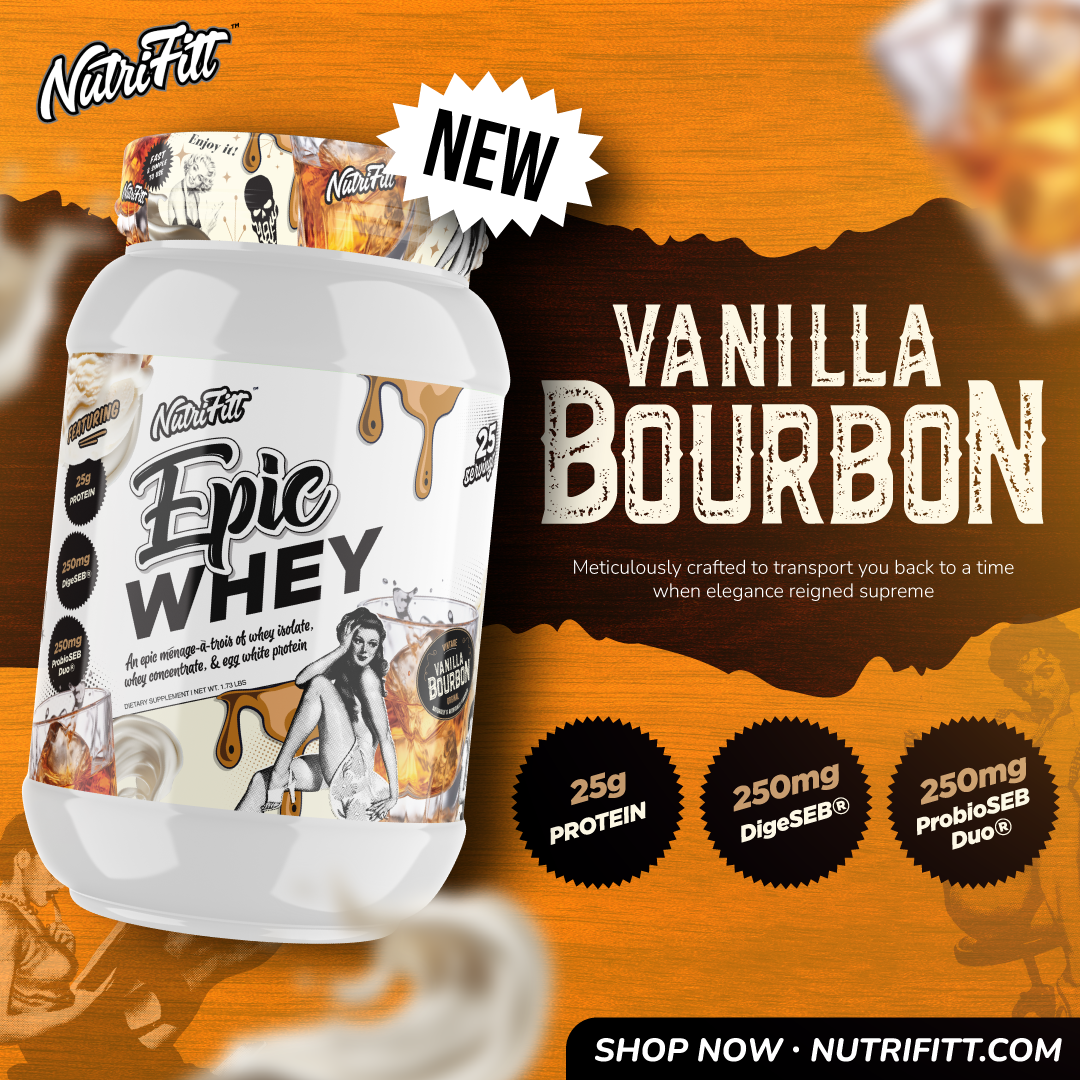
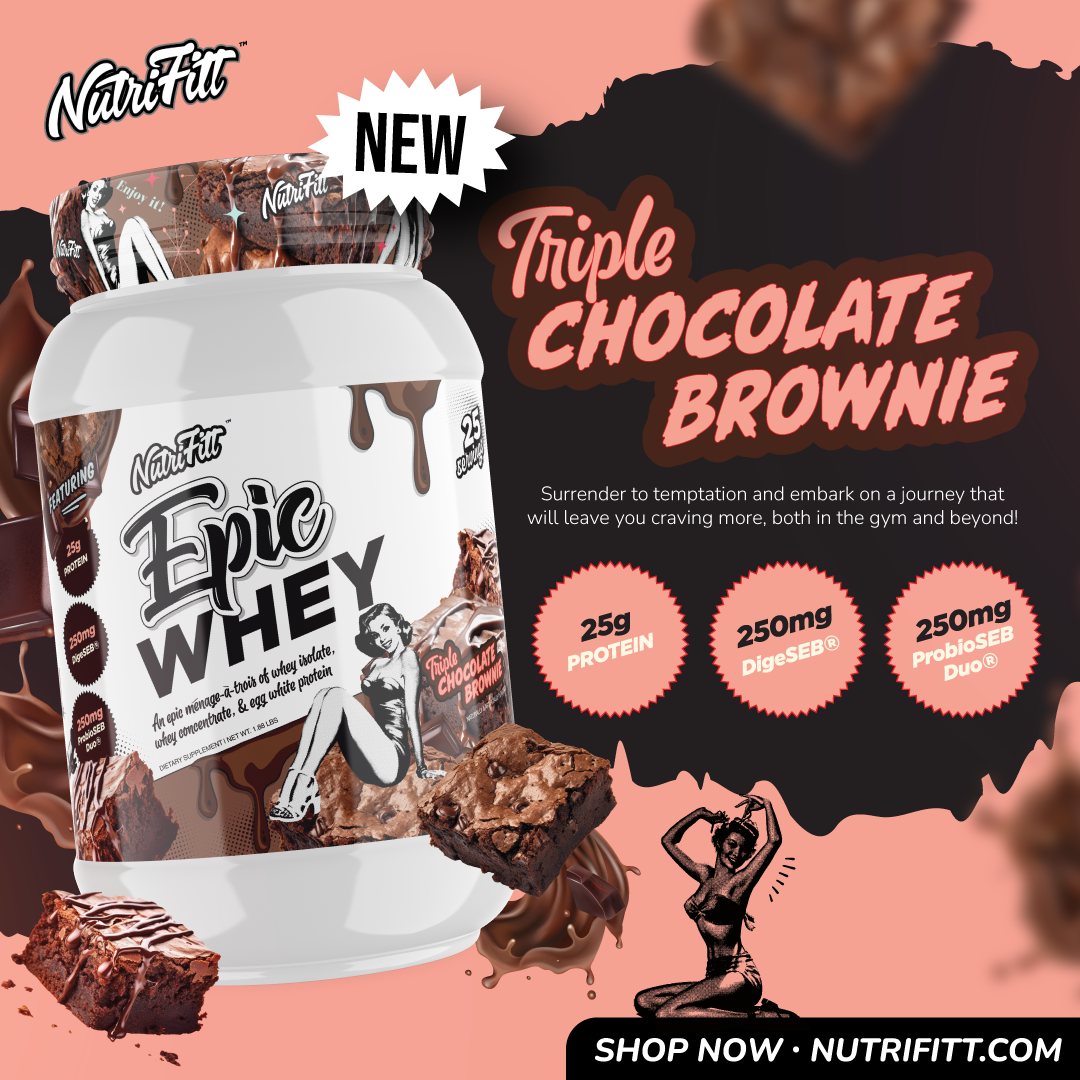
Hitting these protein goals through whole foods alone can be challenging. That’s where high-quality supplements come in handy. NutriFitt's EPIC Whey Protein is a great option, offering fast absorption and high leucine content to aid muscle repair. At $41.24, with flavors like Vanilla Bourbon and Triple Chocolate Brownie, it’s a convenient way to meet your protein needs. Keep your focus on daily protein targets to stay on track for consistent results.
FAQs
How do I figure out my ideal daily protein target?
To figure out how much protein you should eat daily, think about how active you are and what your muscle-building goals look like. For most active people, a good target is 1.2 to 2.2 grams of protein per kilogram of body weight. Studies suggest that for the best muscle growth, around 1.6 grams per kilogram each day hits the sweet spot. Eating more than 3 grams per kilogram is rarely needed unless you’re chasing specific body composition goals while in a calorie surplus.
How should I split protein across meals on rest days?
On rest days, it's important to spread your protein intake evenly across your meals. This approach supports muscle maintenance and recovery by providing a steady supply of nutrients throughout the day. Instead of concentrating your protein consumption around workout times, aim for consistency across breakfast, lunch, dinner, and snacks. This keeps your muscles fueled and ready to repair, even when you're not actively training.
When does a high-protein diet become risky for kidneys?
A diet rich in protein can pose risks to your kidneys if consumed in large amounts over an extended period, especially for those with existing kidney problems. Excessive protein intake can put extra stress on kidney function, so keeping an eye on your consumption is crucial. If you’re concerned, it’s always a good idea to consult a healthcare professional.
Latest Posts

How Ashwagandha Supports Testosterone Levels
10 Best Natural Pre-Workout Ingredients

Best Electrolyte Supplements for Fitness Goals

Best Nootropics for Productivity in 2026

Top 5 Sleep Hygiene Practices for Athletes

5 Best Pre-Workouts for Pump

The 30-Minute Body That Beats the 2-Hour One
Short, high-intensity 30-minute workouts can deliver equal or better cardio, strength, and fat-loss results than long sessions.
Checklist for Choosing Clean Label Certified Supplements
Checklist to verify certifications, ingredient transparency, batch COAs, GMP compliance, and bioavailable forms in clean-label supplements.